Eat Now Apologize Later: A Designer's Review
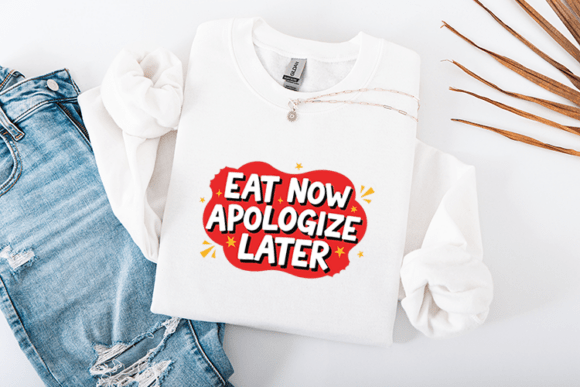
When I first pulled up the Eat Now Apologize Later Funny Quote on my screen, I didn't just see a digital file; I immediately started visualizing where this would land in my shop. As someone who spends hours digitizing and stitching for clients, I know that a great graphic doesn't always translate to a great embroidery project. However, this specific design caught my eye because of its bold, comic-style typography and those soft, rounded shapes. It has a personality that screams "fun," which is exactly what modern customers are looking for in a handmade product.
The visual mood here is unapologetically playful. The layout relies on thick, confident lines that suggest this piece was built to be seen from a distance. For us as Etsy sellers and craft business owners, that immediate readability is gold. Whether it's on a crowded craft fair table or scrolling past on a mobile phone in an online listing, the design holds its own. The vibrant colors mentioned in the description aren't just for show; they signal to the buyer that this is a high-energy item, perfect for breaking up the monotony of neutral home decor or basic apparel.
Real-World Application: The Tote Bag Test
To truly evaluate the Eat Now Apologize Later Funny Quote, I imagined a specific real-life scenario: a custom order for a local bakery needing branded tote bags for their holiday rush. They wanted something witty but professional enough to represent their brand without being too stiff. This design fits that brief perfectly. If I were stitching this onto a canvas tote bag design, the 12 x 12-inch scale provided in the file details (3600 x 3600 pixels) offers plenty of room to work with.
In this context, the "comic-style" aspect becomes a major asset. Comic fonts often have irregular edges and varying stroke widths, which can be tricky in embroidery if not handled well. However, the soft rounded shapes described in the product details suggest that the digitizer likely accounted for pull compensation. On a sturdy canvas, this design would likely result in a clean finished product with minimal puckering. The humor of the quote pairs exceptionally well with food-related merchandise, making it an ideal candidate for aprons, kitchen towels, or even chef hats.
But let's expand beyond the kitchen. Imagine this on a oversized sweatshirt. Sweatshirt embroidery requires designs that can handle the texture of fleece or French terry. Because this graphic relies on bold shapes rather than intricate, tiny details, it should perform well on textured fabrics. The statement "Eat Now Apologize Later" resonates deeply with the comfort-food culture, making it a best-seller for boutique clothing lines targeting young adults or foodies.
Technical Considerations for Stitching
While the aesthetic is strong, we must talk about the technical execution before committing to a production run. The file comes in AI and EPS formats, which are vector-based design assets. This is excellent news for designers who need to resize or recolor elements before sending them to the machine. However, since these are graphic files and not pre-digitized embroidery files (like PES or DST), you will need to digitize them or have them converted specifically for your machine.
When preparing this for a machine embroidery design workflow, pay close attention to the stitch density. Bold, filled areas in comic fonts can become very dense if not managed. If you are using a satin stitch for the outlines, ensure the column width isn't too wide, or it may lose definition over time. For the larger filled areas, a well-balanced fill stitch pattern is crucial. I recommend testing the design on scrap fabric that matches your final material. This allows you to check if the thread colors provide enough contrast against the background fabric, especially if you plan to use dark garments.
One area requiring caution is the hoop size. While the design is 12 x 12 inches, not every machine can handle a hoop that large in one go. You may need to split the design or use a jumbo hoop if your equipment supports it. Additionally, be mindful of curved surfaces like caps. The rigid nature of comic lettering might distort slightly on a structured cap front, so a flat surface like a pillow cover or a patch is often a safer bet for maintaining the integrity of the text.
Fabric and Stabilizer Choices
The success of the Eat Now Apologize Later Funny Quote heavily depends on your choice of stabilizer. For stretchy fabrics like t-shirts or baby clothes, a cut-away stabilizer is non-negotiable to prevent the design from warping after washing. Since this design features vibrant colors and likely solid fills, the weight of the thread could pull on lightweight materials. Always test on a similar weight fabric first.
If you are aiming for a vintage or distressed look, you might experiment with running stitches or lower density fills, but for a crisp, professional look, standard density with proper backing is key. For items that will see frequent washing, like aprons or tea towels, durability is paramount. Ensure your underlay stitches are robust enough to anchor the top threads securely.
Commercial Viability and Branding
From a business perspective, this design adds significant value to a small shop product line. It taps into the current trend of humorous, relatable home goods. Customers love buying personalized gifts that reflect their personality, and a quote about eating is universally relatable. Using this as a printable mockup for your online store can generate immediate interest, as the visual impact is strong even in digital previews.
However, before listing this as a commercial embroidery item, you must verify the licensing terms associated with the AI and EPS files. Just because a file is available for purchase doesn't automatically grant unlimited commercial rights for physical goods or digital resale. Always confirm whether you can sell the stitched item, the digitized file, or both. Protecting your craft business from copyright issues is just as important as the quality of your stitching.
In terms of customer trust, delivering a clean, well-stitched version of this design reinforces your reputation as a skilled maker. Sloppy edges or poor color choices on such a bold design would be immediately noticeable. Conversely, a perfectly executed piece enhances your brand consistency and encourages repeat buyers. It shows that you understand not just how to operate a machine, but how to select designs that resonate with your audience.
Final Verdict for Makers
The Eat Now Apologize Later Funny Quote is a standout choice for designers looking to add some spice to their catalog. Its strength lies in its simplicity and boldness, making it versatile for everything from holiday embroidery gifts to everyday custom apparel. The comic style gives it a unique edge that separates it from generic script fonts.
My advice? Don't just stitch it once. Experiment with different thread finishes—maybe a matte thread for a retro feel or a shiny rayon for that classic comic book pop. Try it on denim for a rugged look or on a soft onesie for a funny baby embroidery gift (keeping in mind safety and comfort). By treating this graphic as a flexible component of your broader creative strategy, you can maximize its potential across various categories within Crafts and Graphics.
Ultimately, this design works because it invites a smile. In a market saturated with serious and minimalist trends, a bold, funny statement piece can be the differentiator that drives sales. Just remember to do your due diligence on the technical side—check your formats, test your tension, and choose your fabrics wisely. With the right preparation, this design can become a staple in your portfolio of embroidered patch work and apparel decoration.